Trucks earn their keep, but they also get worked harder than most vehicles. Between hauling, towing, long idle time, and rough roads, small problems can turn into expensive ones when they are ignored. A smart approach is to prioritize repairs that affect safety first, then address the issues that create heat, vibration, and extra strain on other components. When you handle the right items early, you cut down on surprise breakdowns and keep routine service from turning into a major project. A note in your phone about when the symptom started, what conditions trigger it, and whether it is getting worse can help you prioritize wisely.
The sections below focus on repair categories that show up often on pickups and work trucks, plus the signs that tell you it is time to act. You do not have to fix everything at once, and you do not need to chase every minor noise right away. Instead, set a baseline for how your truck should feel, sound, and respond, then treat meaningful changes as useful signals. That mindset keeps repair decisions practical and makes the next service visit more predictable.
Brake System Wear And Hydraulic Issues
Brakes belong at the top of the list because a truck’s weight and momentum raise stopping distance, especially with cargo or a trailer pushing from behind. If you feel pulsation, a soft pedal, squealing, or a pull to one side, treat it as urgent rather than annoying. Heat can glaze pads, warp rotors, and stress calipers, while moisture in brake fluid can encourage internal corrosion that creates uneven pressure. A truck repair shop can spot wear patterns that point to sticking calipers, overheating, or uneven contact across the rotor face.
Even when the truck still stops, weak braking can make everything else feel worse, from steering stability to traction on wet roads. Staying consistent with automotive maintenance such as fluid checks and periodic inspections helps you catch changes early, which is when repairs are usually simpler. If you tow often, pay attention to how the pedal feels after long downhill stretches, because that is when heat reveals weakness. Once braking feels solid again, it becomes much easier to judge other handling and vibration complaints accurately.
Cooling System Leaks And Overheating Risk
Overheating can turn a manageable repair into engine damage in a short amount of time, so temperature control deserves early attention. A rising gauge, a sweet coolant smell, frequent low coolant, or a heater that blows cold when it should be hot can all signal trouble. The cause might be a pinhole leak in a hose, a radiator seam starting to split, a thermostat sticking closed, or a fan that is not pulling enough air at idle. An auto repair shop can pressure test the system, confirm fan operation, and verify that the cap holds the correct pressure.
Cooling issues also overlap with other systems because heat stresses sensors, gaskets, and transmission fluid life. If a belt is slipping, the water pump may not circulate coolant fast enough, which can mimic larger problems and create false alarms. When repairs are needed, quality replacement components matter, because a weak hose or cap can bring the same issue back quickly. Keeping the right truck parts ready for common wear items like hoses and clamps can reduce downtime when a leak shows up at the worst time.
Battery, Charging, And Starting Failures
Electrical issues can feel random, but they usually follow patterns if you pay attention to the conditions. Slow cranking, flickering lights, repeated jump starts, or accessories that cut out under load often point to a battery nearing the end of its life, a weak alternator, or corrosion at cables and grounds. Trucks that sit for long periods can also develop drain problems that do not show up until the battery is already stressed. A local auto repair shop can load test the battery, measure alternator output, and check voltage drop across the major cables.
For diesel platforms, starting loads are higher, and small electrical losses can show up as hard starts even when the battery is not completely dead. Diesel truck mechanics will inspect the entire circuit path, including grounds, terminals, and starter draw, because a single weak link can create symptoms that look like multiple failures. If the issue is intermittent, heat soak and vibration can be clues, since they change resistance and connection quality. Once the starting and charging system is stable, you are less likely to chase warning lights caused by low voltage rather than a true sensor fault.
Tires, Alignment, And Road Feel Problems
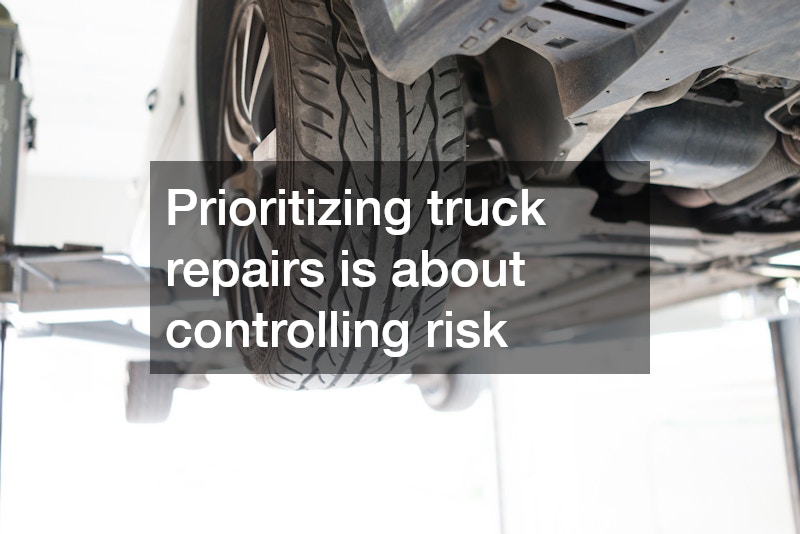
Tires are wear items, but unusual wear is a signal that something else is wrong, and it is rarely worth ignoring. Cupping, feathering, vibration at highway speeds, and rapid inner edge wear can come from alignment drift, worn steering joints, bent wheels, or suspension bushings that no longer hold geometry under load. Underinflation is especially hard on trucks because it creates heat and can damage the tire structure, not just the tread. An auto repair shop can check alignment angles, inspect front end play, and help match tire load ratings to how you actually use the truck. Regular pressure checks and rotation on schedule can also keep a small alignment drift from turning into a ruined set of tires.
If you drive a newer truck with driver-assist features, tire size and wear consistency can affect how smoothly those systems behave. Many owners find it easier to stay consistent when they buy tires through a truck dealership, because fitment, speed ratings, and sensor compatibility are handled without guesswork. The key is not where you buy, but whether you correct the root cause behind the wear so the next set does not suffer the same pattern. Once tire wear is even and the truck tracks straight, you will usually notice better ride comfort and fewer steering corrections on long drives.
Suspension Wear And Ride Control Loss
Suspension problems often announce themselves through bouncing, harsh impacts, nose dive during braking, or a loose feeling at highway speeds. Clunks over potholes, a rear end that hops on rough pavement, and body roll that feels exaggerated can point to worn bushings, weak dampers, or tired joints that are no longer holding alignment under load. These issues matter for safety because they affect tire contact with the road during braking and turning, especially on uneven surfaces. When the dampers are the weak point, auto shock replacement can bring back control and reduce the tire wear that comes from constant bouncing.
When you address ride control, it is smart to inspect mounts, bushings, and any leveling components at the same time, because one worn piece often accelerates the wear of its neighbors. Trucks that tow are sensitive to weak dampers because trailer sway becomes harder to correct when the rear suspension cannot settle quickly. If the truck feels unstable only when loaded, that still points to suspension capacity or worn components that need attention. Using quality truck parts in the suspension and steering areas can prevent repeated alignments and shorter tire life after the repair.
Steering Play And Front End Component Failure
Steering problems can develop slowly until the truck feels vague, wanders, or requires constant correction on the highway. Loose tie rod ends, worn ball joints, play in the steering gear, or failing rack mounts can create that disconnected feeling, along with clunks when turning the wheel in place. On rough roads, small amounts of looseness become noticeable quickly because repeated impacts work joints back and forth. A focus on automotive maintenance like periodic front end checks helps you catch early play before it turns into tire damage or unpredictable handling.
Sometimes steering complaints overlap with ride control, because weak dampers can make the front end feel floaty even when the steering hardware is not completely worn out. In those cases, auto shock replacement may be part of what brings the truck back to a stable baseline, even if it is not the only repair. The goal is to restore predictable response so you are not surprised by the truck in a quick lane change or a panic stop. Once steering and suspension are tight, the truck tends to feel quieter, and new noises are easier to isolate and address.
Transmission Heat, Shift Quality, And Drivability
Transmissions in trucks live a hard life when towing and hauling, and heat is the most common enemy. Delayed engagement, harsh shifts, shudder at steady speeds, or slipping under acceleration can signal fluid breakdown, worn clutches, or control issues that are no longer compensating well. Some situations improve with service and cooler checks, while others point to mechanical wear that needs deeper work. A truck dealership can be useful for software-related diagnostics and for confirming whether updates, adaptives, or control strategies are contributing to the symptoms. If you notice a burnt smell, dark fluid, or a new flare between gears, treat it as a sign that heat is winning and action is needed.
Even when the transmission is the main concern, do not ignore the supporting pieces that influence temperature and pressure. Cooler lines, seals, and mounts can create leaks and vibration, and those secondary problems accelerate internal wear if they are left alone. If the truck tows frequently, consider how gear selection affects heat, because constant hunting between gears can raise temperatures quickly. When shift quality becomes consistent again, a truck repair shop can help confirm that driveline vibrations or mount wear are not disguising themselves as transmission trouble.
Breakdowns are not a repair category by themselves, but the decisions you make when something fails can protect the truck from further damage. If the vehicle cannot be driven safely, heavy duty towing is often the safer choice than improvising with straps, chains, or a light-duty tow method. Correct attachment points matter for steering components, suspension arms, and the underbody, and the wrong approach can bend parts that were not damaged in the original failure. Once the truck is moved, write down what happened, what you heard, and what you smelled, because those details can point a technician toward the right diagnosis quickly.
Differential, Driveline, And Axle Repairs
Driveline issues often sound like humming, whining, or clunking, and they can change based on speed, load, or whether you are accelerating or coasting. Worn u-joints, a failing carrier bearing, leaking axle seals, or differential wear can show up this way, and ignoring them can lead to sudden loss of drive or damage that spreads. If you feel vibration under acceleration or hear a repetitive clunk when shifting between drive and reverse, treat it as a priority rather than a quirk. A truck repair shop can check for play, inspect seals, and identify whether the sound is coming from the differential, the driveshaft, or wheel-end components.
It is worth paying attention to how the truck behaves when you turn tightly, because binding or chatter can suggest issues in axle bearings or limited-slip components. Driveline repairs are often cheaper when addressed early, because a worn u-joint replaced in time costs less than a driveshaft failure that damages yokes. Fluid checks matter here as well, since low or contaminated fluid accelerates gear wear and can create heat that worsens the problem. If a seal is leaking, having the correct truck parts ready can shorten the repair window and help you avoid driving with low fluid levels.
Engine Performance And Fuel System Problems
Engines can run for a long time with small problems, but trucks expose weakness when they are asked to pull hard at low RPM. Hesitation, loss of power under load, rough idle, or a sudden change in fuel economy can come from ignition problems, air intake restrictions, fuel delivery issues, or sensors drifting out of range. The right fix depends on testing rather than guessing, because swapping parts without data gets expensive fast. Diesel truck mechanics will often start with air and fuel basics, then move into boost, exhaust restriction, and control readings if the truck is not responding under load.
Even on gas trucks, the same principle applies: restore clean airflow and stable ignition, then confirm fuel delivery is consistent before blaming larger components. A local auto repair shop can help you separate immediate drivability risks from longer-term tune-up items, which keeps decisions practical. If a misfire is ignored, it can overheat the exhaust path and make a straightforward fix become more costly. When the engine runs clean again, most drivers notice smoother acceleration, better throttle response, and fewer temperature swings in stop-and-go traffic. Keeping a short log of fuel fill-ups, warning light timing, and recent changes can make diagnosis faster and reduce the temptation to replace parts blindly.
Exhaust, Emissions, And Persistent Warning Lights
Exhaust issues are not only about noise. Leaks can introduce fumes into the cabin, change sensor readings, and cause drivability problems that feel like power loss under load. Rattles from heat shields, broken hangers, and rusted flanges can sometimes be repaired before the entire system needs replacement, but they should not be dismissed. A truck repair company can check for leaks, verify sensor behavior, and inspect mounting points that cause the system to contact the frame or vibrate.
If you delay exhaust and emissions work, you may end up chasing symptoms that feel like engine or transmission problems because airflow and sensor feedback influence fueling and shifting. A truck repair company can also help you plan repairs so you are not forced into rushed decisions at the last minute. Pay attention to changes in sound and smell, since those are early signals that a small leak is growing into a larger opening. Once the exhaust path is sealed and secure, the truck often feels smoother at steady speed and less sluggish when climbing grades.
Even after the truck is back home, do not assume the event is over until you confirm there are no new leaks, vibrations, or warning lights. If the issue was severe enough to leave you stranded, heavy duty towing may have been necessary, and that makes a follow-up inspection even more important. A quick check of wheels, steering response, coolant level, and underbody contact points can catch secondary damage early, before it creates another failure. Treat the first week after a major repair like a test period, and pay attention to any change in feel that was not present before.
Prioritizing truck repairs is about controlling risk, controlling heat, and controlling the costs that come from letting one weak component punish the rest of the vehicle. Start with braking, cooling, and tire issues that affect safety and stability, then work through drivetrain and performance concerns that create secondary damage when ignored. Keep records, pay attention to patterns, and treat meaningful changes in feel as signals rather than annoyances. A calm, consistent approach keeps your truck reliable for work, travel, and towing without turning every new sound into a crisis.