A vehicle crash can leave you dealing with several problems at once. You may be worried about injuries, unsure whether your car is safe to drive, and overwhelmed by calls, paperwork, repair estimates, and unexpected expenses. Even a relatively minor collision can create complications that do not become obvious until hours or days later.
The decisions you make immediately after a crash can affect your physical recovery, financial stability, and ability to resolve insurance or legal concerns. Acting carefully does not mean assuming the worst. It means documenting what happened, getting appropriate evaluations, and avoiding rushed choices before you understand the full situation.
A useful approach is to work through the aftermath in stages. Begin by protecting everyone at the scene and gathering information. Then address possible injuries, preserve important records, review your options, and make sure the vehicle receives both structural and mechanical inspections. Following a clear process can help you stay organized while reducing the chance that an overlooked issue becomes more difficult or expensive later.
Document the Scene and Report the Collision Carefully
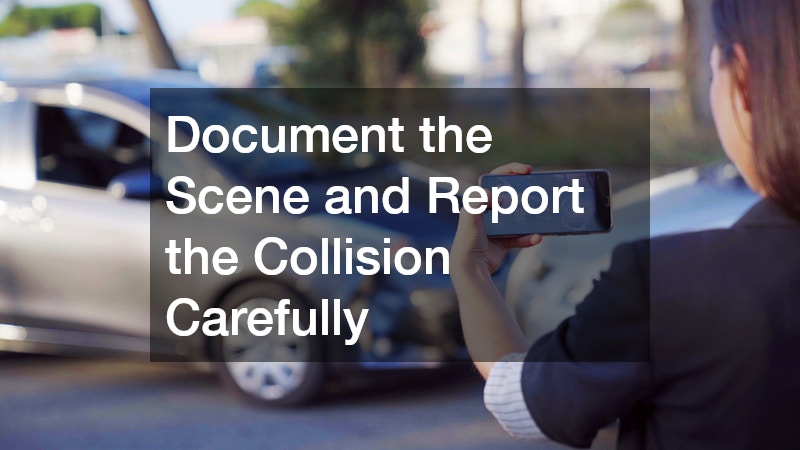
Your first responsibility after a crash is to protect yourself, your passengers, and everyone else involved. Call emergency services when anyone appears injured, traffic is blocked, vehicles are creating a hazard, or significant property damage has occurred. Turn on your hazard lights and avoid standing in active traffic.
Move the vehicles only when it is safe and legally appropriate to do so. When possible, take photographs before anything is moved. The original positions of the vehicles may help explain how the collision happened.
Exchange names, phone numbers, driver’s license information, license plate numbers, vehicle details, and insurance information with the other drivers. Keep the conversation calm and factual. Do not argue about responsibility or speculate about who caused the crash.
Ask witnesses for their names and contact information. A neutral witness may remember details that the drivers missed during the confusion. If police respond, request the report number and ask how to obtain a copy.
Report the crash promptly according to your policy requirements. Car insurance companies may request photographs, recorded statements, repair estimates, medical information, and a description of what happened. Answer questions honestly, but avoid guessing. It is reasonable to say that you do not know an answer or that you are still waiting for a medical or mechanical evaluation.
Be especially careful when discussing injuries immediately after the collision. Adrenaline can temporarily reduce pain, so saying that you are completely fine may not accurately reflect how you feel later. Describe your current condition without making predictions.
Review your policy for important details, including:
- Liability coverage limits
- Collision and comprehensive coverage
- Uninsured and underinsured motorist protection
- Medical payment or personal injury coverage
- Rental vehicle reimbursement
- Towing and roadside assistance
- Deductible amounts
- Claim reporting deadlines
When shopping for affordable insurance, do not compare premiums alone. A low monthly payment may come with high deductibles, limited protection, or inadequate coverage for medical costs and vehicle damage. Consider how much financial risk you could realistically handle after a serious collision.
Create a dedicated folder for the claim. Save photographs, police reports, receipts, medical records, repair estimates, emails, and notes from phone calls. Include the date, time, name, and summary of every important conversation. Organized documentation can make the entire process easier to manage.
Have Possible Injuries Evaluated Promptly
Not every collision injury causes immediate or severe pain. Stress hormones and adrenaline can mask symptoms, while inflammation may develop gradually. Neck pain, headaches, shoulder tension, dizziness, back discomfort, and stiffness can appear several hours or even days after the crash.
Seek emergency medical attention immediately for serious symptoms such as:
- Loss of consciousness
- Confusion or memory problems
- Chest pain or difficulty breathing
- Severe or worsening headaches
- Weakness, numbness, or tingling
- Uncontrolled bleeding
- Vision changes
- Difficulty walking or maintaining balance
- Significant abdominal pain
Even when symptoms seem mild, a timely evaluation can help identify concerns that should be monitored or treated. A medical professional can review the circumstances of the crash, perform an examination, order imaging when appropriate, and recommend follow-up care.
Keep accurate records of every appointment, diagnosis, medication, treatment recommendation, and restriction. These records help your providers understand your progress and create a clear timeline showing when symptoms began.
Some patients may explore chiropractic treatment for whiplash after receiving an appropriate evaluation. The goal of conservative care may be to reduce stiffness, improve mobility, address muscle tension, and help the patient gradually return to normal activity. The appropriate approach depends on the person’s symptoms, health history, and the nature of the injury.
A car accident chiropractor should understand that crash-related symptoms may involve more than temporary soreness. Ask how the recommended care fits into your broader recovery plan and whether coordination with your physician, physical therapist, or other providers is necessary.
Be cautious of anyone who promises a guaranteed recovery timeline or recommends an extensive treatment plan without first examining you. Care should be based on your individual condition, progress, and response to treatment.
Following medical recommendations consistently is important. Attend appointments, perform approved home exercises, take medications as directed, and report new or worsening symptoms. Do not exaggerate pain, but do not minimize it either.
A simple daily recovery log can help you track:
- Pain location and severity
- Headaches or dizziness
- Sleep disruptions
- Physical limitations
- Activities you cannot complete
- Time missed from work
- Medication use
- Changes in mood or concentration
- Improvement or worsening after treatment
This information can help providers adjust your care and may also be useful when documenting how the crash affected your daily life. Prompt care and accurate records support better decision-making, even when the injury eventually resolves without significant intervention.
Preserve Records and Understand Your Legal Options
Many crashes are resolved through ordinary insurance claims, but some situations become more complicated. Serious injuries, disputed responsibility, multiple vehicles, commercial drivers, inadequate coverage, or long-term work limitations may create questions that are difficult to answer on your own.
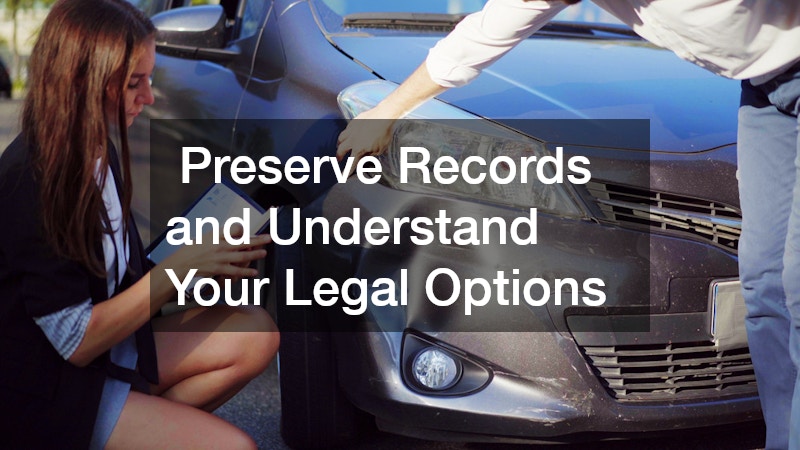
Evidence can disappear quickly. Vehicles are repaired, debris is removed, surveillance footage is erased, witnesses become harder to locate, and memories fade. Preserve everything connected to the collision, even if you are not sure whether it will be important.
Important records may include:
- Scene photographs and videos
- Police or incident reports
- Witness contact information
- Medical bills and treatment notes
- Prescription and travel expenses
- Tow and storage invoices
- Rental vehicle receipts
- Repair estimates
- Pay stubs and missed-work records
- Emails, letters, and claim documents
- Photographs of damaged personal property
Do not discard damaged items, repair the vehicle, or authorize destruction of important evidence before it has been thoroughly documented. If the insurer declares the vehicle a total loss, make sure you understand when the vehicle will be moved or disposed of.
There are circumstances in which speaking with a car accident attorney may be helpful. These can include serious injuries, permanent limitations, denied claims, uncertainty about available coverage, or disagreement over who was responsible. Commercial vehicle crashes and collisions involving several potentially responsible parties can also require a more detailed investigation.
An accident lawyer may also review communications or proposed settlement terms. Accepting a final payment or signing a release can limit your ability to seek additional compensation later, even if new expenses or symptoms appear. Read documents carefully and ask questions before signing anything you do not fully understand.
Not every collision requires representation, and no professional can guarantee a specific result. When choosing someone to advise you, ask about relevant experience, communication practices, fees, case expenses, and who will handle daily questions.
Social media also deserves caution. A photograph or casual comment can be misunderstood when viewed without context. Avoid posting detailed information about the crash, your injuries, treatment, travel, exercise, or negotiations while the matter is unresolved.
The most important reason to seek information early is not to escalate the situation. It is to understand your choices before evidence is lost, deadlines pass, or permanent decisions are made.
Select a Repair Facility Based on Safety and Capability
A damaged bumper, fender, or door may be the most visible result of a crash, but the vehicle can have additional problems beneath the surface. Modern vehicles contain sensors, cameras, wiring, computers, structural components, and safety systems that may be affected even when exterior damage appears limited.
Possible hidden damage includes:
- Bent structural components
- Suspension or alignment problems
- Damaged mounting points
- Cracked cooling system parts
- Broken wiring or connectors
- Wheel and tire damage
- Exhaust system movement
- Sensor or camera misalignment
- Water leaks around repaired areas
Compare auto repair shops based on their training, equipment, communication, documentation, and warranty coverage. Price matters, but a low estimate may not include all the work required to restore the vehicle properly.
Ask each facility several questions before authorizing repairs:
- Does the shop regularly work on your vehicle’s make and model?
- Are technicians trained to handle modern safety systems?
- Will you receive a detailed written estimate?
- What types of replacement parts will be used?
- How will hidden damage be documented?
- Will additional repairs require your approval?
- Is the work protected by a written warranty?
- Who communicates with the insurer?
- Are required calibrations performed on-site?
- What quality checks occur before delivery?
An initial estimate may change after damaged panels are removed. This does not automatically mean the original inspection was careless. Some damage is impossible to see until the vehicle is disassembled. The shop should photograph newly discovered concerns, explain the additional work, and obtain the necessary approvals.
Proper auto collision repair may involve much more than replacing panels and applying paint. The process can include structural measuring, frame correction, mechanical work, parts replacement, refinishing, alignment, scanning, and calibration.
Many newer vehicles use advanced driver-assistance features, including automatic emergency braking, blind-spot monitoring, parking sensors, lane assistance, and adaptive cruise control. Repairs involving bumpers, windshields, suspension, cameras, or sensors may require recalibration. A vehicle can look completely repaired while a safety feature remains inaccurate.
Before accepting the vehicle, review the final invoice and ask for documentation showing that required scans, calibrations, alignments, and inspections were completed.
At pickup, take time to:
- Check panel gaps and alignment
- Inspect paint color and finish
- Test lights, windows, locks, and electronics
- Look for dashboard warning lights
- Confirm that trim pieces are secure
- Listen for new rattles or wind noise
- Verify that personal belongings are present
- Ask about warranty procedures
A quality repair should restore safe operation and proper system performance, not simply make the exterior look better.
Confirm Mechanical Safety Before Resuming Normal Driving
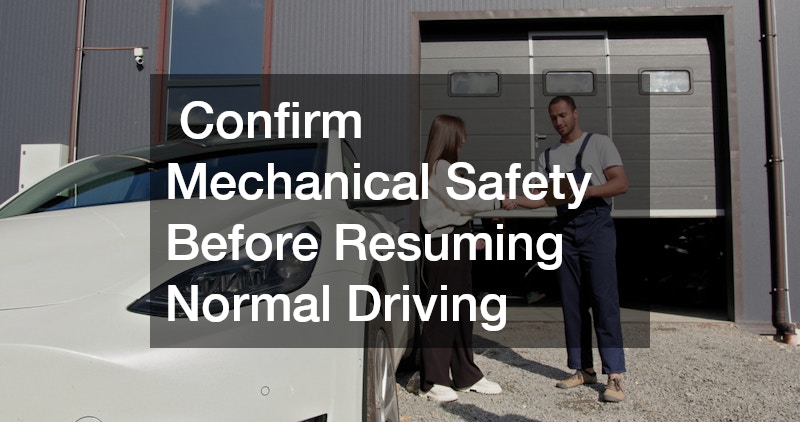
Body repairs do not always address every mechanical concern created by a collision. Depending on the impact, the vehicle may need a separate inspection of the steering, suspension, tires, brakes, cooling system, electrical system, and drivetrain.
A local auto repair service can inspect mechanical systems that may fall outside a body shop’s primary work. Provide the technician with a copy of the collision estimate and explain where the vehicle was struck. This context can help guide the inspection.
Braking performance deserves immediate attention. An impact can damage lines, hoses, calipers, rotors, wheel bearings, sensors, or other components. Brake repairs may be necessary when you notice grinding, squealing, pulsation, pulling, a soft pedal, longer stopping distances, or a warning light.
Do not continue driving a vehicle with serious braking, steering, tire, or fluid concerns. Have it towed when safe operation is uncertain.
A post-repair inspection may include checks of:
- Brake components and fluid
- Steering and suspension
- Wheel alignment
- Tires and wheels
- Coolant and other fluids
- Battery connections
- Exhaust mounting points
- Warning codes
- Exterior and interior lighting
Keep all inspection reports, invoices, alignment printouts, and repair documents. These records can be useful for warranty concerns, insurance questions, future maintenance, and eventual resale.
Once the vehicle has passed its inspections, take a short and cautious test drive. Begin on familiar roads at lower speeds. Pay attention to steering, braking, acceleration, noises, vibrations, and dashboard alerts. Test the vehicle under normal conditions only after it feels stable and predictable.
Return to the repair facility promptly when something seems wrong. Do not assume a new sound, vibration, or warning light is unrelated simply because the cosmetic work has been completed.
Move Through the Recovery Process One Step at a Time
The aftermath of a vehicle crash can be stressful, but a clear sequence can make the situation more manageable. Protect everyone at the scene, gather evidence, report the collision, and obtain appropriate medical attention. Preserve your records, understand important deadlines, and avoid signing documents before you know what they mean.
The vehicle also deserves a complete evaluation. Visible body damage may be only one part of the problem, so confirm that structural, electronic, and mechanical systems have been inspected and tested before returning to regular driving.
Avoid making decisions based only on speed, convenience, or the lowest price. A rushed settlement, incomplete medical evaluation, or surface-level repair may create larger concerns later.
Careful documentation and qualified professional evaluations allow you to make choices based on evidence rather than pressure. By protecting your health, preserving your options, and confirming that your vehicle is truly safe, you can move forward with greater confidence after a crash.